Fermi went public in October at a $19 billion market valuation. The company had no revenue, no signed customers, and a 5,000-acre site in the Texas panhandle that one investor would later describe to short sellers as a piece of dirt with a dream. On Friday, after months of failed customer negotiations, the board fired co-founder and chief executive Toby Neugebauer, the Texas billionaire whose name and political connections had carried the pitch.
Neugebauer is now suing the company over wrongful termination. Fermi has filed a counter-petition for a temporary restraining order, alleging he is trying to seize control back from the board. The stock is down 84 percent from peak. The original premise, that Fermi would lease land to hyperscalers and supply them directly with 17 gigawatts of off-grid power, is intact only on paper.
What 17 gigawatts actually meant
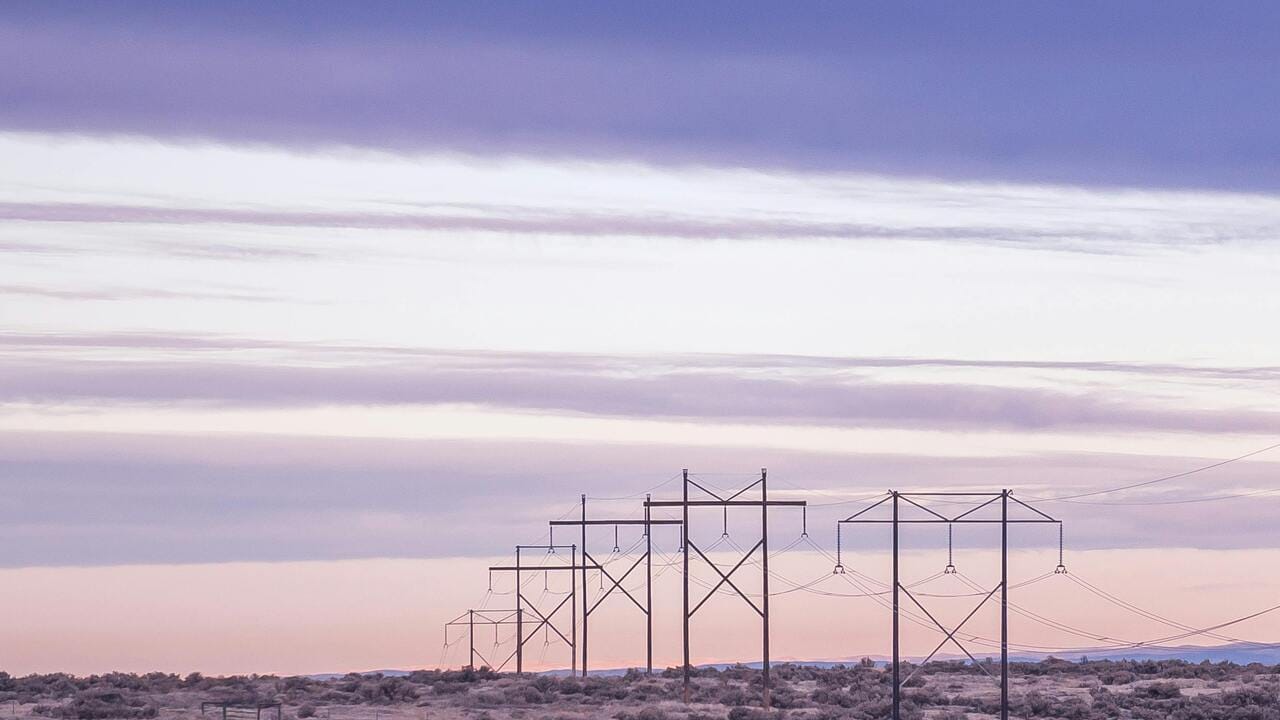
Seventeen gigawatts is roughly three times the peak electricity demand of New York City. A single gigawatt powers about 750,000 homes. Most large gas-fired plants do not produce that much electricity, and a single nuclear reactor produces around one gigawatt. Fermi was promising the equivalent of a small national grid on a five-thousand-acre lease, supplied first by gas turbines and later by a fleet of nuclear reactors that did not yet exist.
The site itself was the most credible part of the pitch. Leased from the Texas Tech University System near Amarillo, it sits at the crossroads of several natural gas pipelines, one of which Fermi has agreed to tap for roughly two gigawatts of generation. It also sits near the Pantex plant, the largest U.S. nuclear weapons facility, which Fermi argued would streamline reactor permitting. The grid backstop is a 0.2 gigawatt connection that Neugebauer described to investors last month as an insurance policy.
By February, the Amarillo Globe-News was reporting that construction had paused. By April, a short-seller report from Fuzzy Panda Research had circulated photographs of an essentially undeveloped site. The dream raised $19 billion in market capitalisation. The dirt remained dirt.
Why no one signed
Fermi's pitch needed an anchor tenant to unlock project financing. In November, the company announced a $150 million agreement with an unnamed customer. The deal collapsed within weeks. Fermi disclosed the failure in a December filing, triggering a 46 percent single-day sell-off. Neugebauer later told Business Insider, and people familiar told Bloomberg this week, that the customer had been Amazon. Talks broke down for two reasons: Amazon wanted a 15-year contract rather than the 20-year term Fermi was offering, and Amazon's own engineers estimated that Matador would deliver materially less reliable power than Fermi was projecting. Amazon now declines to comment and says it has had no recent business engagements with Fermi.
Jigar Shah, who ran the U.S. Department of Energy's Loan Programs Office during the Biden administration, has called Fermi a failure of monumental proportions and argues that off-grid data-centre projects in general should be receiving far more scepticism than they get. His point is straightforward: banks will not finance off-grid power for hyperscaler workloads, because the grid, drawing from many sources, is more reliable than a handful of expensive on-site plants. Financing follows reliability. Reliability follows the grid. Fermi's pitch sat outside both.
The political wrapper
The branding was always the loudest part of the pitch. The official corporate name of the campus is the President Donald J. Trump Advanced Energy and Intelligence Campus. Internally and in marketing it is referred to as Project Matador. Fermi was co-founded by Rick Perry, the former Texas governor and Trump's first-term energy secretary, who keeps his board seat and a roughly $80 million stake. On the company's first earnings call after the IPO, Neugebauer told investors that current energy secretary Chris Wright and interior secretary Doug Burgum had personally intervened in trade negotiations with Germany on Fermi's behalf, to help the company secure gas turbines from Siemens.
The political access was real. The customer base was not. The two were marketed as if they were the same asset.
The Neugebauer pattern
This is not Neugebauer's first politically branded venture to collapse without a working business underneath. In 2022 he raised $50 million for an anti-woke banking startup called GloriFi, which filed for Chapter 7 bankruptcy the following year. He is currently being sued by GloriFi's bankruptcy trustee on allegations that include securities fraud, misrepresentations to investors, and gross negligence. He has denied wrongdoing and counter-sued his GloriFi investors, accusing them of running a coordinated reputational attack.
The Fermi structure rhymes. A politically branded vehicle, a large initial raise, a rapid loss of operational control, and a litigation perimeter built around the founder's continued involvement.
What the IPO was actually pricing
Fermi at $19 billion of market capitalisation, with zero revenue and zero signed customers, is at the extreme end but not outside the distribution of late-cycle AI-infrastructure pricing. CoreWeave, Lambda, and IREN are large operating businesses with disclosed contracted backlogs and built capacity. Fermi was the inverse: capital first, customers never. Public-market investors paid for an option on a five-thousand-acre piece of dirt and a politically connected pitch deck.
That option is now worth about $5.40 per share, an 84 percent decline from peak. The board has installed a two-co-president interim Office of the CEO and hired Heidrick & Struggles to find a permanent replacement. Some sell-side analysts (Stifel maintaining a Buy with a $29 target, Evercore an Outperform with $20) are framing Neugebauer's removal as the unlocking of a stuck deal flow rather than a fatal indictment of the underlying project. The Texas Tech ground lease technically allowed termination at year-end if no tenant signed; Texas Tech has reaffirmed support.
The data-centre boom does need both money and electrons, and Fermi told a story that bundled them with political wrapping paper. The story raised $19 billion. It did not, in eighteen months, persuade a single hyperscaler to put pen to paper.